Chained Beasts Before You Buy: A Complete Guide to Featherweight Games' Gladiator Roguelike
Read our comprehensive review of Chained Beasts before you buy. Discover its co-op mechanics, unique affliction system, pros, cons, and performance.
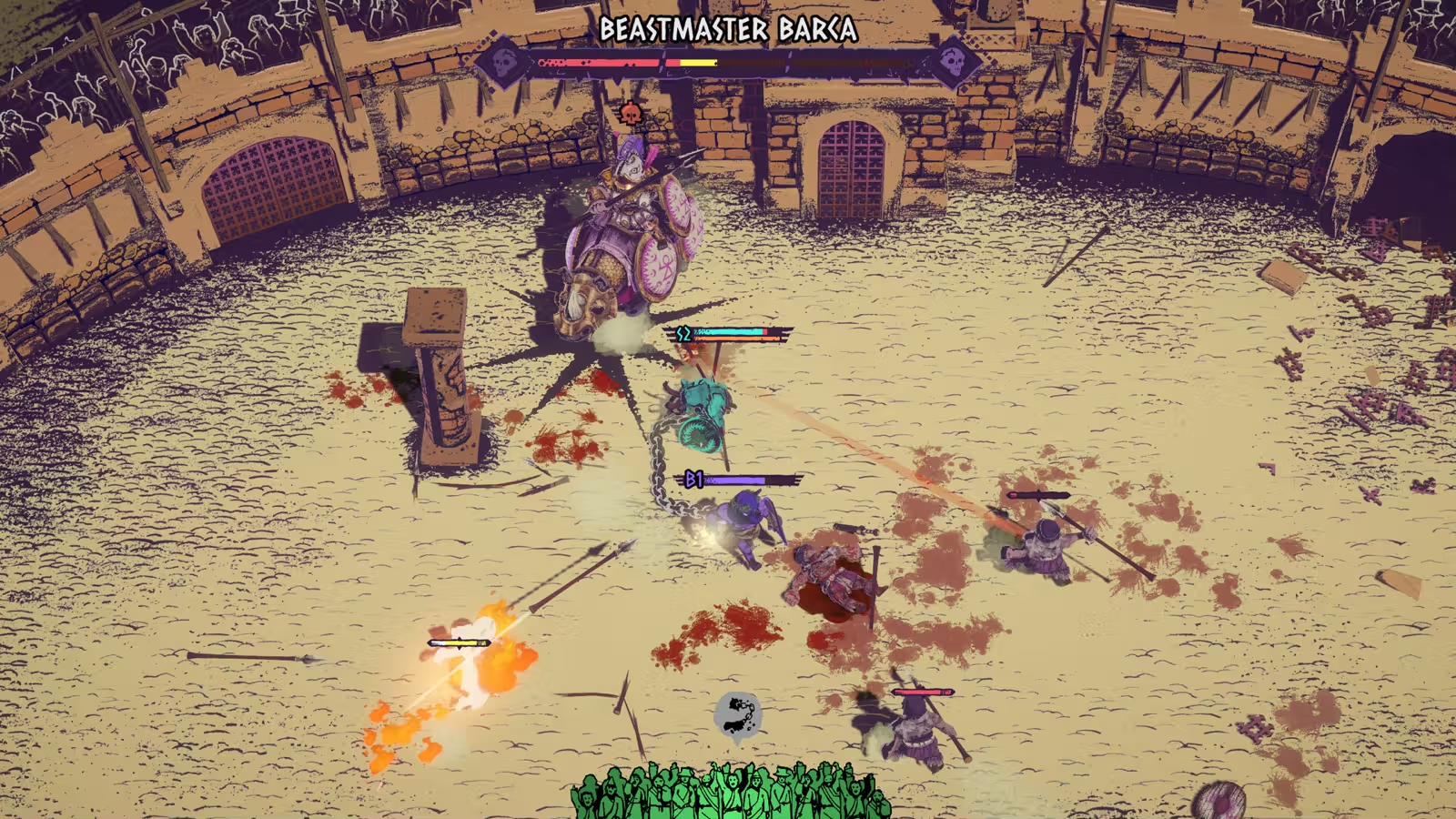
Introduction to the Arena: What Is Chained Beasts?
Stepping into the blood-soaked arenas of Featherweight Games' latest release requires more than just a sharp sword and a brave heart. If you are researching Chained Beasts before you buy, you are likely wondering whether this chaotic gladiator roguelike lives up to the heavy expectations set by its 12-year development journey. Blending slapstick physics with punishing combat, the game challenges players to survive a brutal gauntlet running from Carthage through Germania and ultimately into the heart of Rome.
Before opening your wallet, looking closely at Chained Beasts before you buy is essential to understanding how its mechanics operate in both solo and co-op modes. Whether you plan to brawl alongside three friends or brave the Colosseum by yourself, this breakdown covers everything from the core gameplay loops and risk-reward systems to community reports and performance metrics.
Core Mechanics: Combat, Crowds, and the Chain
The defining gimmick of the experience revolves around physical linkage. In multiplayer sessions, up to four combatants find themselves physically tethered together, meaning every dodge, sprint, and stumble directly impacts your allies. For solo players, your character is typically anchored to heavy arena objects or environmental hazards that demand careful positioning and clever manipulation.
| Feature Type | Solo Experience | Multiplayer (Co-Op) Experience |
|---|---|---|
| Attachment | Anchored to heavy objects or arena pillars | Up to 4 players chained together |
| Mobility | Requires dragging heavy weights and tactical kiting | Demands synchronized movement to avoid tangling |
| Offensive Use | Stretch chains across traps and hazards to trip foes | Trip enemies collaboratively and execute team combos |
| Vibe | Intense, tactical survival roguelike | Chaotic, hilarious party-game energy |
Beyond the physical tether, the combat system relies on straightforward melee weapons, shields, bows, dodges, and timed blocks that can leave attackers stunned. However, player experience shows that the true depth emerges from interacting with the environment. You can hurl ceramic pots, shove combatants into snake pits, ignite foes, or wield severed body parts as improvised cudgels. Furthermore, the bloodthirsty crowd scores your performance; playing it safe earns you scraps, while creative executions and brutal kills line your pockets with gold.
The Risk-Reward System: Surviving Ghastly Wounds
One of the standout design choices in the game is its unique affliction system. Healing your injuries between rounds is rarely free; every health recovery option introduces a debilitating physical or mental handicap.
| Affliction Name | Effect on Your Run | Severity Level |
|---|---|---|
| Annoying | Allies automatically attack if you stand too close | Moderate (Co-op) |
| Impulsive | Forces skill locks and mandatory shop purchases | Moderate (Economy) |
| Infatuated | Locks camera onto an ally, giving damage buffs when looked at | Niche (Co-op) |
| Near/Far Sighted | Obscures vision drastically, creating "Bagel-Vision" | Severe (Sensory) |
According to community reports, these afflictions create an addictive risk-reward loop. Do you push your luck for extra experience points, accepting a permanent limp or color blindness? Or do you play conservatively and miss out on crucial power upgrades? Because certain end-game items and skills actually scale in power depending on how many negative traits you carry, the game constantly tempts you to embrace madness for the sake of raw combat power.
Solo vs. Co-Op: Where Does the Game Shine?
While the title supports single-player sessions, user feedback strongly indicates a distinct divide in how the game feels depending on your party size. Solo runs offer a tight, tactical challenge that can easily consume 10 to 15 hours of your time. However, the physics engine and tether mechanics occasionally introduce frustration when playing alone.
+---------------------------------------------------------------+
|                      Playstyle Breakdown                      |
+-------------------+-------------------------------------------+
| Solo Play         | Tactical, methodical, higher difficulty   |
+-------------------+-------------------------------------------+
| Co-Op Play        | Hilarious chaos, synergistic crowd control|
+-------------------+-------------------------------------------+
| Controller Support| Highly recommended by developers & players|
+-------------------+-------------------------------------------+
When diving into online or couch co-op with friends, the chaos multiplies exponentially. Slapstick moments—such as accidentally dragging a teammate into a spike wall or navigating an arena while suffering from opposing vision impairments—elevate the experience from a standard hack-and-slash title into a memorable party game. For more details on system requirements, platform availability, and launch discounts, you can check the Steam Store Page for Chained Beasts.
System Requirements and Performance
Before pulling the trigger on a purchase, ensuring your hardware can handle the arena carnage is crucial. The developers have optimized the title to run smoothly on a wide variety of rigs, including handheld devices and older graphics cards.
| Hardware Tier | Minimum Specifications | Recommended Specifications |
|---|---|---|
| Operating System | Windows 10 / macOS 11 | Windows 10/11 (64-bit) |
| Processor | Intel Core i5-5257U / AMD Ryzen 3 1200 | Modern quad-core or equivalent |
| Memory (RAM) | 8 GB RAM | 16 GB RAM |
| Graphics Card | GeForce GTX 1050 / AMD RX 460 | Modern dedicated GPU |
| Peripherals | Keyboard/Mouse (Gamepad recommended) | Dedicated Gamepad / Controller |
Player experience notes that while keyboard controls are functional, plugging in a controller significantly improves maneuverability during frantic boss battles and tight crowd clearances.
Pros and Cons Breakdown
Weighing the advantages against the drawbacks helps clarify whether this gladiatorial journey matches your gaming preferences.
| Pros (The Good) | Cons (The Bad) |
|---|---|
| Addictive risk-reward affliction mechanics | Underlying melee combat feels simple at first |
| Incredible comedic potential in 4-player co-op | Solo play can occasionally feel frustrating |
| Satisfying environmental kills and crowd scoring | Content variety can thin out after 15+ hours |
| Frequent updates and an active post-launch roadmap | Early difficulty spikes can deter casual brawlers |
Frequently Asked Questions
Is Chained Beasts playable in single-player?
Yes, you can play entirely solo. However, community reports emphasize that the game is primarily designed with chaotic co-op in mind, where the chain mechanics truly shine.
How many players are supported in multiplayer?
The game supports 1 to 4 players through online co-op, shared/split-screen, and cross-platform multiplayer options across PC and Xbox consoles.
What happens when you heal in Chained Beasts?
Healing between rounds forces you to accept permanent or semi-permanent physical and mental afflictions—such as impaired vision, erratic movement, or involuntary actions—creating a tense risk-reward dynamic.
Is the game worth buying at launch?
If you enjoy chaotic roguelikes, cooperative party games, and tactical combat loops, evaluating Chained Beasts before you buy reveals a high-value package, especially when taking advantage of launch week promotions.
Related Guides
Are Chained Beasts Worth Your Time? A Complete Review of the Co-Op Gladiator Roguelike
Discover if Chained Beasts is worth your time. Read our in-depth review covering co-op gameplay, combat mechanics, and arena challenges.
Read more
Chained Beasts Review: A Brutal, Hilarious Co-Op Gladiator Roguelike Experience
Read our in-depth Chained Beasts review to discover how this chaotic 1-4 player gladiator roguelike combines brutal combat, co-op physics, and quirky afflictions.
Read more