The Ultimate Guide to Chained Beasts Local Co-Op: Mastering Arena Chaos With Friends
Master Chained Beasts local co-op with expert strategies, crowd hype tactics, affliction survival tips, and setup advice for 1-4 players.
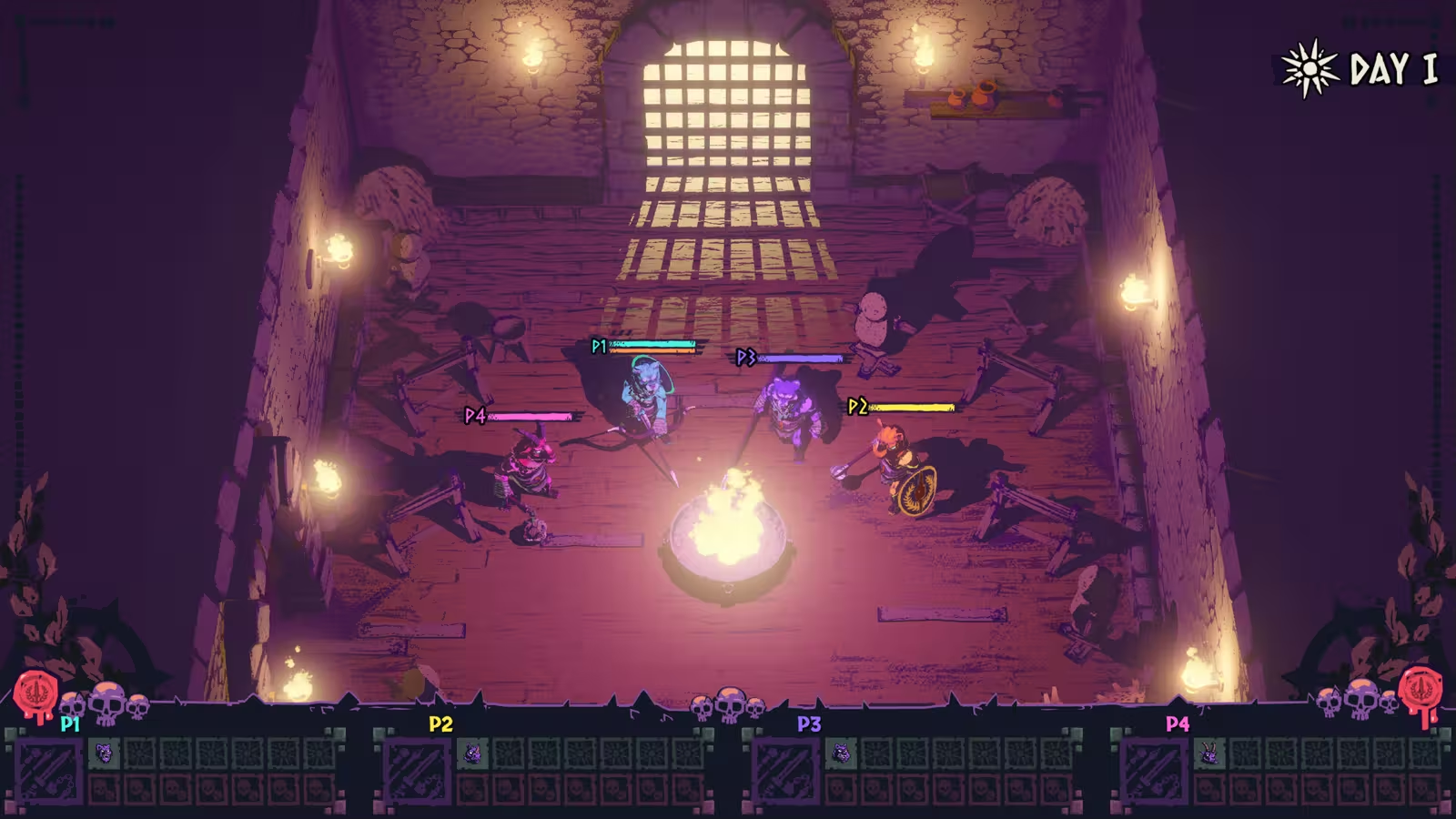
Teamwork makes the dream work, but in the Colosseum, it might just get you tangled around a pillar or flattened by a furious boss. If you are diving into Chained Beasts local co-op, you and up to three friends are in for a hilariously chaotic ride of shared pain, strategic coordination, and glorious gladiatorial combat. Developed by Featherweight Games, this action roguelike forces players to literally tether their fates together, turning every swing, dash, and survival choice into a group negotiation.
Whether you are trying out Chained Beasts local co-op for the first time or looking to optimize your runs on higher difficulty levels, navigating the physical and mental strains of the arena requires more than just button mashing. This guide breaks down everything you need to know about setting up your couch sessions, surviving brutal afflictions, and conquering the bloodthirsty crowds.
Setting Up Your Couch Session for Maximum Chaos
Gathering your friends around a single screen brings back the golden age of couch multiplayer, but preparing for a run takes a bit of forethought. Because the game relies heavily on physical positioning and synchronized movement, having the right hardware is essential before stepping into the sand.
| Setup Requirement | Recommendation | Details |
|---|---|---|
| Controllers | Gamepads (Xbox/PlayStation) | Featherweight Games explicitly recommends controllers over keyboard setups for local play. |
| Player Count | 1 to 4 Players | Supports seamless drop-in styles and full group lobbies from the start menu. |
| Matchmaking | Invite-Only / Couch | Currently features local and invite-only online co-op; no public matchmaking queue exists at launch. |
According to player experience and community reports, getting your lobby configured takes seconds, allowing you to pick your beasts and jump straight into the tutorial together. Just make sure everyone has a compatible gamepad ready to go, as same-screen co-op requires at least one controller per player.
Mastering the Chain Mechanics and Friendly Fire
The defining hook of the experience is the literal chain binding your group together. Depending on the round layout, your quartet might be linked in one long strand, split into struggling pairs, or dragging individual heavy weights.
Because friendly fire is active by default, you cannot simply swing wildly without consequences. Communication is your best weapon.
| Chain Dynamic | Potential Hazard | Tactical Advantage |
|---|---|---|
| Long Strand | Whipping teammates into hazards or traps | Extending reach to pull allies away from boss attacks |
| Paired Links | Limiting movement range in tight arenas | Coordinating double-team charges and pincer attacks |
| Heavy Weights | Dragging down sprinting players | Using momentum to slingshot teammates across the arena |
Smart players learn to use the chain itself as an offensive tool. By synchronizing your movements, you can trip opposing combatants, pull allies out of danger zones, and create devastating combat loops. For instance, pairing a spear user who grants "fury" status upon hitting allies with a front-line brawler can turn friendly fire into a massive damage-buffing engine—provided you have a merchant item to negate the actual health damage.
Surviving Ghastly Wounds and Risk-Reward Potions
Healing between arena battles is never free in Featherweight Games' brutal world. When you visit the healer to restore your health pool, you must choose from a shared pool of limited potions, each tied to a permanent physical or mental affliction for the rest of your run.
[Healer Phase] ➔ [Shared Potion Pool] ➔ [Select Health Restoration] ➔ [Accept Permanent Affliction]
Choosing who drinks what requires careful team strategy. Community feedback highlights several notable affliction categories that can completely alter how a run plays out:
- Sensory Impairments: Afflictions like "Near-Sighted" or "Far-Sighted" blur your screen outside of specific cones of vision, sometimes leading groups to adopt hilarious workarounds like "Bagel-Vision."
- Behavioral Shifts: Conditions like "Impulsive" force you to lock in skills or purchase unwanted shop items, straining your shared financial pool.
- Psychological Terrors: Hallucination-inducing elixirs cause players to see fake enemies, requiring constant callouts to distinguish real boss threats from phantom targets.
Balancing these debuffs against your current build ensures that your team remains more overpowered than you are horribly nerfed. You can check out more details about the game's mechanics on the official Chained Beasts Steam Page.
Playing for the Crowd: Hype, Variety, and Payouts
Survival alone will not fill your coin purse. To earn the funds needed for powerful items and equipment upgrades, you must actively entertain the bloodthirsty audience watching from the stands.
| Performance Metric | How to Maximize Score | Audience Reaction |
|---|---|---|
| Variety | Mix light attacks, charge strikes, and environmental throws | Increases base hype meter |
| Tempo | Maintain constant aggression without excessive downtime | Accelerates crowd excitement tiers |
| Carnage | Rack up efficient multi-kills and shatter arena objects | Triggers maximum bloodlust payouts |
At the end of each brawl, the game scores your collective performance across these three metrics. The top-performing gladiator earns the coveted title of "Crowd Favorite," injecting a healthy dose of internal competition into your cooperative team. Since your coin pool is shared, every player must contribute to the show to ensure the group can afford top-tier gear at the next merchant stop.
Frequently Asked Questions
Does Chained Beasts local co-op support cross-play?
Yes, the game supports online cross-platform multiplayer alongside its robust local couch co-op options, allowing you to mix local friends with online companions.
How many players can join a single couch co-op session?
The game supports 1 to 4 players simultaneously in both local and online co-op modes, making it an ideal party game for groups.
Are controllers required for local co-op?
Yes, the developers recommend playing with a gamepad, and at least one controller is required if you are setting up same-screen or local multiplayer sessions.
What happens when a player dies in local co-op?
Runs test your collective endurance across gruelling battles and multi-act structures, emphasizing teamwork to keep everyone alive and managing shared health trade-offs.